
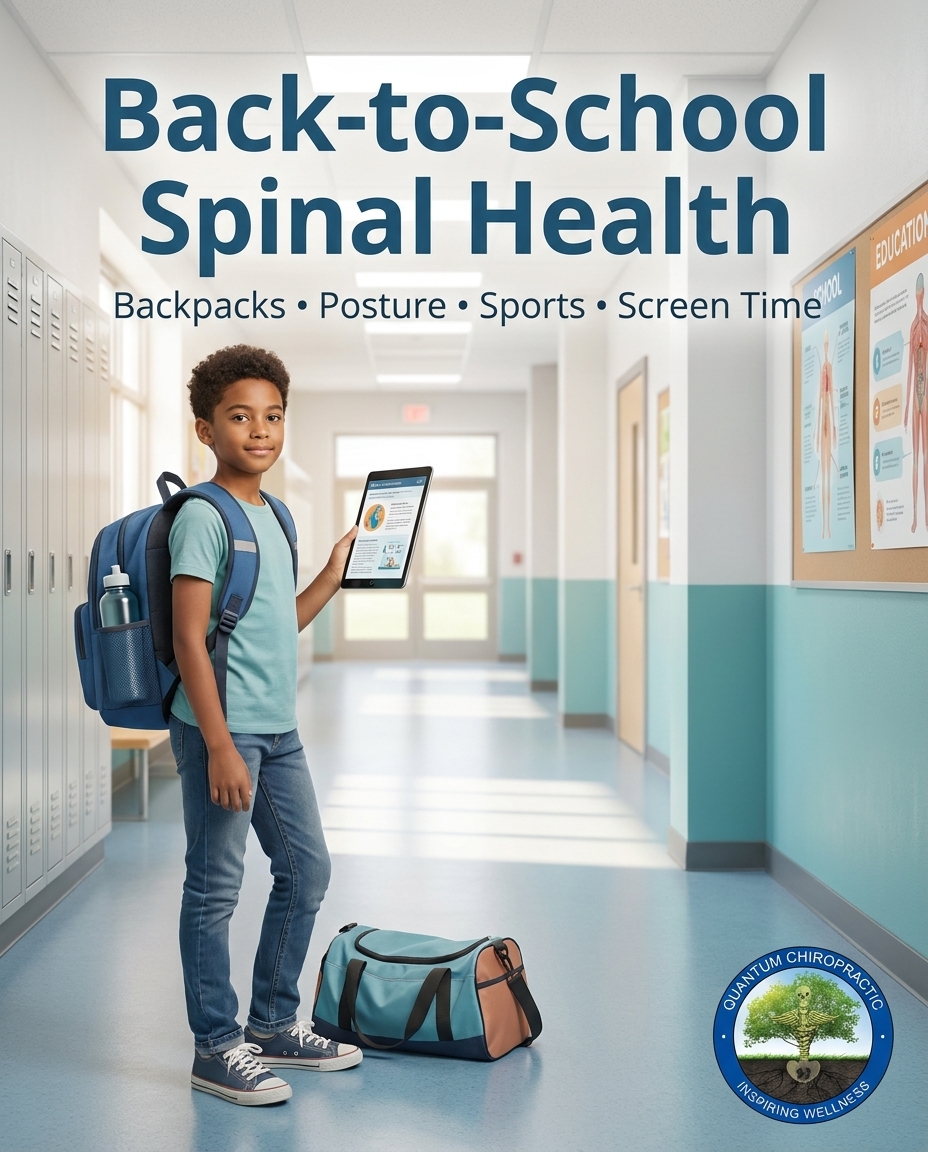
Get Aligned This Back-to-School Season: Best Practices for Back Health
As Sacramento families prepare for a new school year, supply lists, class schedules, and academic goals often take center stage. It is also a helpful time to consider the everyday habits that support a child's comfort, posture, and spinal health. At Quantum Chiropractic, we provide gentle, whole-body chiropractic care for children, teens, adults, and families in Sacramento, California.
From backpacks and classroom seating to sports practices and screen time, the school routine can place regular demands on growing bodies. A few practical habits can help support healthy spinal alignment and reduce unnecessary neck, shoulder, and back discomfort throughout the year.
Backpack fit, athletic safety, growth-related changes, and device use all deserve a place on the back-to-school checklist. With timely attention to concerns, families can help students begin the year feeling prepared, active, and comfortable.
Why Spinal Health Matters During the School Year
A typical school day can involve 6 to 7 hours of sitting, plus carrying books and supplies, moving between classes, participating in activities, and using technology for schoolwork and recreation. Together, these routines can create ongoing stress on the neck, shoulders, and back. The shift from a relaxed summer schedule to a structured, sit-all-day routine happens over just a week or two, and a growing body needs time to adjust to it.
These demands are a normal part of student life, but poor posture, muscle tightness, and spinal strain may develop when supportive habits are overlooked. Taking a proactive approach in the first few weeks of the school year can help students remain more comfortable, focused, and ready to participate in the activities they enjoy.
Meaningful support often starts with small, consistent changes. Understanding where neck and back strain can come from gives families a clearer starting point for protecting spinal health throughout the school year.
Backpack Safety Starts With Weight and Fit
Backpacks can be a significant source of preventable back discomfort for children and teenagers. A bag that is overloaded or worn incorrectly may place added stress on the spine, shoulders, and neck.
As a general guideline, a student's backpack should weigh no more than 10% to 15% of their body weight. For a 70-pound child, that works out to roughly 7 to 10 pounds, and for a 120-pound teen, about 12 to 18 pounds. When a pack is heavier than that, students may adjust the way they stand or walk to manage the load, which can affect posture and contribute to discomfort over time.
How a backpack is packed and carried matters just as much as its total weight. Encourage students to:
- Use both shoulder straps rather than carrying the bag on one shoulder, which forces the spine to compensate and unevenly loads one side of the body.
- Adjust the straps so the backpack stays close to the body and sits at the mid-back, with the bottom of the bag resting no more than 4 inches below the waistline, since a low-hanging bag pulls the shoulders backward and strains the lower back.
- Place heavier books and supplies nearest the back panel so the weight rests against the spine rather than pulling away from it.
- Choose a bag with wide, padded, adjustable straps at least 2 inches wide, and use a waist or chest strap when available to distribute weight across the hips and torso for added stability.
- Do a weekly cleanout to remove anything that does not need to make the trip, and use lockers or make extra trips when possible instead of carrying every item all day.
Reducing the amount of weight a child carries, and making sure what they do carry is positioned well, can make a noticeable difference for a growing body.
Supporting Young Athletes During Sports Season
Fall sports are an exciting part of the back-to-school season. Athletics offer important physical and social benefits, but they can also increase the possibility of injury while a child or teenager is still developing.
Proper warm-ups before practices and games are one of the simplest ways to support safer movement. Aim for 5 to 10 minutes of dynamic movement like leg swings, arm circles, and light jogging to gradually raise the heart rate and prepare muscles and joints for activity. A cooldown afterward, with gentle stretching held for 20 to 30 seconds per stretch, gives the body an important opportunity to transition out of physical exertion and may help reduce next-day soreness.
Protective gear should fit correctly and be worn consistently. Equipment that is overly loose, too tight, or improperly adjusted may not provide its intended support during play, so it is worth rechecking fit as children grow through the season. Hydration and recovery matter, too: young athletes should drink water in the hours before activity and take fluid breaks roughly every 15 to 20 minutes during play, along with getting at least one full rest day per week and 8 to 10 hours of sleep to allow the body to repair.
Encourage students to speak up when something feels wrong. Early attention to discomfort may help keep a smaller concern from becoming a larger issue. When families have concerns before athletic activity increases, an individualized evaluation may be helpful. At Quantum Chiropractic, we consider the physical demands each student may be facing as part of our family chiropractic care.
Growth Spurts Can Affect Posture and Alignment
Parents often notice changes in a child's posture or movement during adolescence, and rapid growth can be a major reason for these differences. During a significant growth period, a child can grow 3 to 4 inches in a single year, and bones may lengthen more quickly than muscles and other soft tissues can adapt. This natural process can influence coordination, posture, and spinal alignment, and may temporarily leave a child feeling clumsier or stiffer than usual.
Growth spurts are often most noticeable between ages 9 and 15 for girls and ages 12 and 17 for boys. Some temporary aches and discomfort can occur during rapid growth, but pain that lasts more than 2 to 3 days or keeps returning should not be dismissed.
Families may want to seek a professional evaluation when they notice:
- Persistent neck, shoulder, back, or pelvic pain that lasts more than 2 to 3 days or keeps returning.
- Uneven shoulders or hips, a visibly tilted head, or other posture changes.
- Changes in walking, coordination, or movement, or a tendency to favor one side.
- Headaches that become frequent or disruptive, especially more than 1 to 2 times per week.
- A noticeable reduction in a child's usual activity level, or reluctance to take part in activities they normally enjoy.
Our Sacramento chiropractor provides gentle pediatric chiropractic and family chiropractic care tailored to each patient's individual needs.
Helping Students Avoid Tech Neck
Digital devices are now an everyday part of education and life outside the classroom. While technology offers many benefits, extended device use has contributed to a common concern known as tech neck.
Students may spend long stretches looking down at phones, tablets, or laptops. Tilting the head just 15 degrees forward can roughly double the effective load on the neck, and at 60 degrees that load can reach the equivalent of about 60 pounds. Held for hours a day, this repeated forward posture can place substantial stress on the cervical spine, contributing to neck pain, upper-back tension, and overall discomfort.
Families can encourage healthier screen habits with a few practical adjustments:
- Raise phones and tablets toward eye level whenever possible, rather than dropping the chin to look down.
- At a desk or workstation, position the screen at eye height about 18 to 24 inches away, keep feet flat on the floor, and use a supportive chair that lets the back rest against the backrest.
- Follow the 20-20-20 rule during schoolwork and recreation: every 20 minutes, look at something about 20 feet away for 20 seconds.
- Build in regular movement breaks, standing up and stretching every 30 to 45 minutes, to reset posture and keep muscles from stiffening.
These small habits allow the eyes and body to reset and may reduce the strain that builds during prolonged device use.
How Quantum Chiropractic Supports Sacramento Families
Chiropractic care is often associated with addressing injuries, but it can also support overall spinal health as students move through the demands of the school year. Regular evaluations may identify areas of tension or imbalance related to backpack use, sports participation, extended sitting, or screen time, so small issues can be addressed before they turn into recurring aches.
At Quantum Chiropractic, our whole-body chiropractic care is gentle, comprehensive, and individualized. We care for patients of all ages, including children and teens, and may incorporate approaches such as Sacro Occipital Technic, also known as SOT chiropractic, and craniopathy based on each patient's needs.
Healthy spinal alignment may help students feel more comfortable while handling daily school routines. Addressing concerns early can also give families greater peace of mind as they support their child's long-term well-being.
As the new school year begins, it is an ideal time to focus on habits that encourage healthy posture and spinal health. If your child has experienced back, neck, or shoulder discomfort, or if you are concerned about posture or alignment, contact Quantum Chiropractic in Sacramento at (916) 616-1595 to request an appointment.